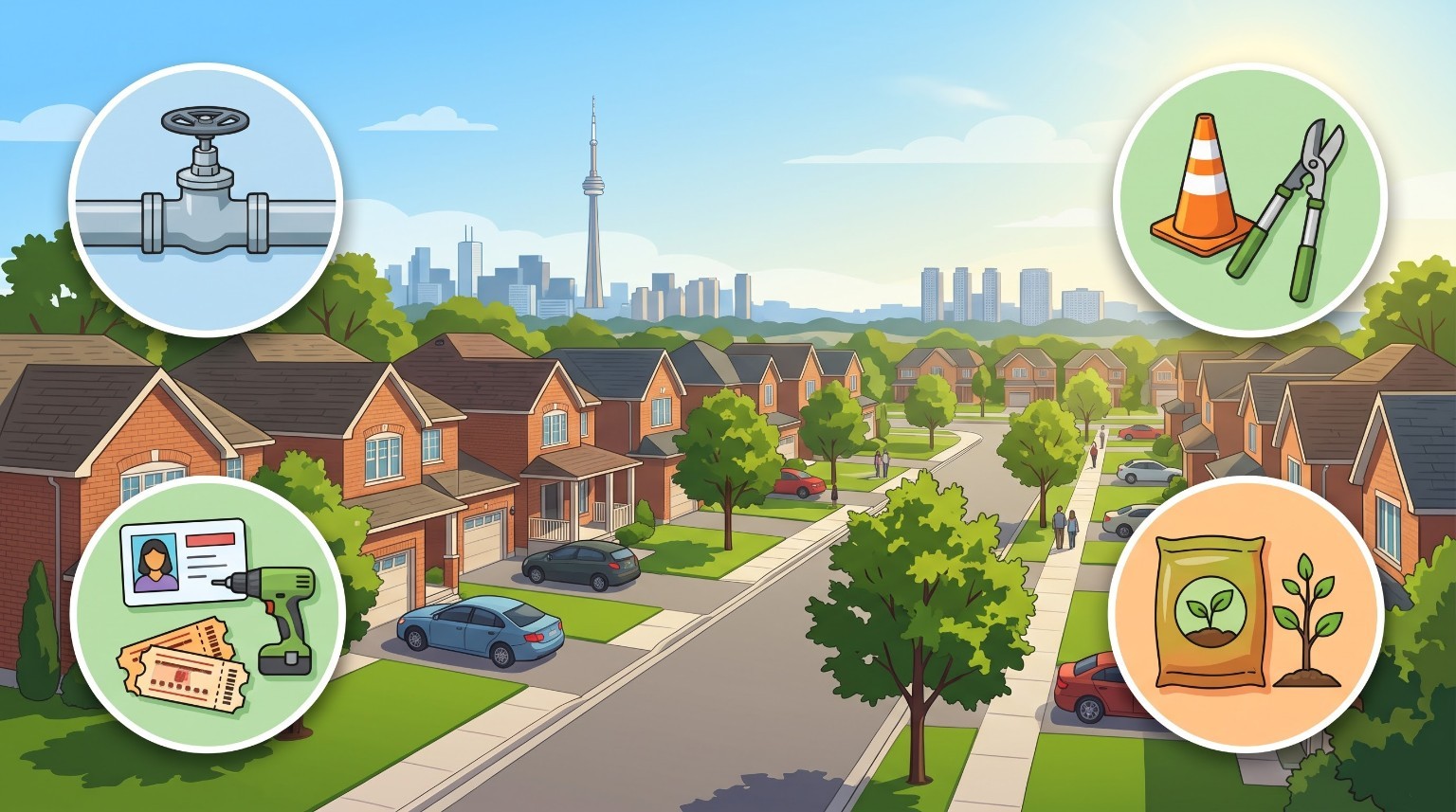
When the property tax bill arrives, it is natural to think about the obvious municipal services: road maintenance, snow clearing and garbage collection. But Toronto and York Region municipalities also offer flood-prevention rebates, street maintenance requests, library borrowing programs and environmental events that residents may overlook.
A GTA address does not guarantee the same benefits everywhere. Toronto, Markham, Richmond Hill and Vaughan each set their own eligibility rules, amounts and application procedures. This guide takes four practical themes from the original community-service roundup and checks the details against the relevant official sources as of October 31, 2026.
At a glance
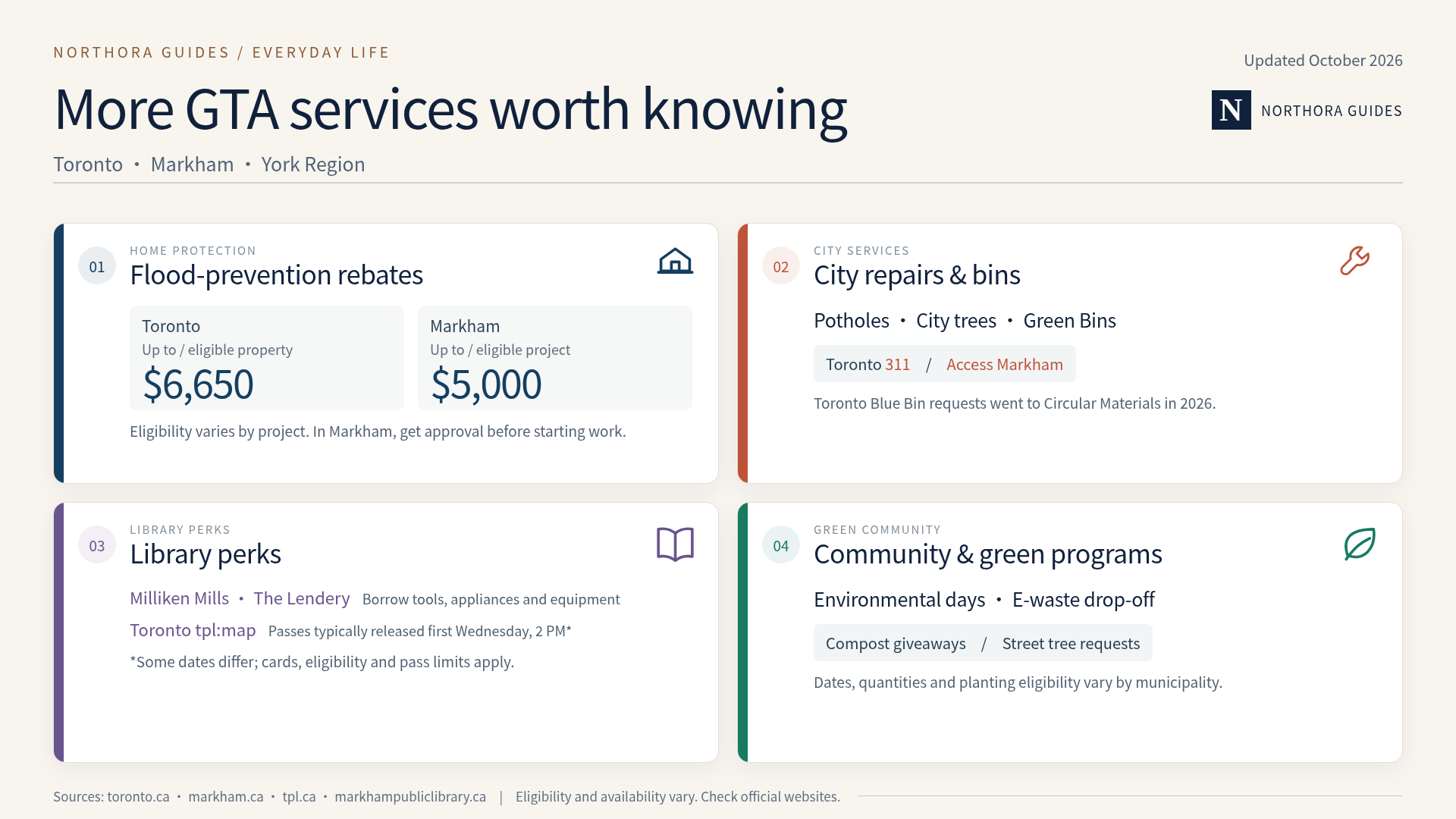
- Flood prevention: Toronto's expanded subsidy offers up to $6,650 per eligible property, rather than the old $3,400 cap. Markham has project-specific rebates of up to $5,000, subject to prior approval and other conditions.
- Roads and trees: Report issues to the appropriate municipality. Toronto generally requires a pothole-damage claim notice within 10 days; reporting the pothole is not itself a claim.
- Libraries: Markham's Milliken Mills Library has a Lendery for tools and equipment. Toronto Public Library's tpl:map offers limited free attraction passes.
- Waste and environment: Toronto has free compost at eligible events; oversized-item pickup is funded by an annual service fee, and Blue Bin recycling moved to Circular Materials in 2026.
1. Flood prevention rebates: check the rules before hiring a contractor
Toronto: maximum subsidy increased to $6,650 in 2026
Toronto expanded its Basement Flooding Protection Subsidy Program on May 1, 2026. Eligible properties can access up to $6,650 in total subsidy support, with the expanded rates applying to eligible work completed on or after November 12, 2025.
- Backwater valves: Up to 80% of eligible invoices, capped at $1,600 per device for up to two devices.
- Sump pump: Up to $2,250 for an eligible installation, with up to $300 more for a qualifying battery backup.
- Home plumbing assessment: Up to $500; foundation drain pipe severance and capping: up to $400.
The maximum is not a guaranteed payment. Property type, prior subsidy history, contractor licensing, permits, inspections and paperwork can affect eligibility. Check the City of Toronto's full program rules before commissioning work.
Markham: project-specific rebates and mandatory pre-approval
Markham's Private Plumbing Protection Rebate Program lists up to $2,000 for certain outdoor backwater valve installations, up to $1,750 for indoor valves and up to $5,000 for the specified combination of weeping tile disconnection and sump pump installation. These are different project caps, not automatically stackable cash amounts.
New work requires the City's technical review and approvals, permits, qualified contractors and inspections as applicable. The official program currently gives April 30, 2027 as the building-permit deadline and July 31, 2027 for rebate applications. See Markham's procedure.
Richmond Hill and Vaughan
Richmond Hill offers up to $1,500 for qualifying backwater valve work. Vaughan's subsidy covers 50% of eligible invoiced cost, up to $750 for an approved back-water valve. Both are subject to conditions and funding. Apply to the municipality where the property is located.
2. Potholes, municipal trees and waste collection
Pothole damage: a 311 service request is not a compensation claim
In Toronto, you can report potholes to 311. If a pothole damages a tire, wheel or vehicle, the City requires notice of a claim within 10 days of the incident. Keep the date, location, photos, repair estimates and invoices. The City investigates whether its maintenance obligations were met, so compensation is not automatic.
Other municipalities can have different claims processes and deadlines. Don't assume the Toronto process applies across York Region.
Who maintains the tree in front of your home?
Trees within the public road allowance may be municipally owned. In Toronto, residents can request an inspection or maintenance through 311. Trees on private land are generally the owner's responsibility. Confirm ownership before hiring a contractor or removing a street tree.
Broken bins and oversized furniture
Toronto residents receiving City curbside collection can generally request no-cost repair of a damaged garbage or Green Bin through 311. Blue Bin repairs and recycling inquiries moved to Circular Materials on January 1, 2026.
The City collects eligible bulky furniture and mattresses on regular collection days, but the service is paid for through an annual solid-waste fee; describing it as entirely free would be misleading. Check specific set-out rules and exceptions for each item and municipality.
3. More than books: tools, attraction passes and digital resources
Borrow occasional-use tools at Markham's Lendery
The Lendery at Milliken Mills Library lends hand tools, kitchen appliances and recreational items, including examples such as a hammer drill. Borrowers must generally be 18 or older, hold a valid Markham Public Library card and complete the required agreement and waiver. Items are available on a first-come, first-served basis, with no holds. Check the current catalog and terms.
Visit Toronto attractions with tpl:map
With an eligible adult Toronto Public Library card, you can reserve limited tpl:map attraction passes. Standard monthly releases are scheduled for 2 p.m. on the first Wednesday of each month, with listed exceptions and different releases for certain performance passes. High-demand venues sell out quickly, and eligibility and frequency limits apply. See the official tpl:map FAQ.
If you live in York Region but work, study or own property in Toronto, you may qualify for a free full-service Toronto Public Library card with supporting documentation. York Region residence alone does not confer automatic eligibility. Availability of eLearning, movie streaming and makerspaces varies by library system and branch.
4. Environmental days, compost and street trees
Toronto's Community Environment Days generally run from April through September. At eligible events, residents can safely drop off certain e-waste and household hazardous waste and pick up free bagged compost, usually limited to two bags per household while supplies last. York Region municipalities may run other seasonal programs with different schedules and supplies.
Residents may also request a street tree in the City-owned road allowance in front of a Toronto property. The City assesses the proposed site, utilities and suitability and determines what can be planted. This is not the same as a guaranteed free tree-planting service on privately owned land.
Your practical checklist
- Identify your municipality before checking a rebate or service, especially if you live in York Region.
- Verify eligibility and approvals first for floodproofing work; beginning too early can jeopardize your rebate.
- Preserve evidence promptly if a pothole damages your car, and file a claim separately from any road repair request.
- Check your library card eligibility before planning to borrow equipment or reserve free attraction passes.
- Use current waste and event instructions: Blue Bin handling changed in 2026 and compost giveaway supplies are seasonal.
Frequently asked questions
Can I live in Markham and claim Toronto's basement flooding rebate?
Generally not. Toronto's program is for qualifying properties within the City of Toronto. Markham property owners need to check Markham's separate program and eligibility requirements.
Does reporting a pothole to 311 guarantee compensation?
No. Road repair requests and damage claims are separate processes. The municipality will investigate liability.
Are library tools and museum passes always free and unlimited?
No. Access can be free for eligible members, but reservation, age, card, frequency, damage and availability restrictions may apply.
Is Toronto's subsidy $3,400 or $6,650?
The expanded 2026 program offers up to $6,650 for eligible work that meets the applicable completion dates and program conditions. Older work may fall under earlier caps.
Bottom line
These services won't reduce your property tax bill directly, but they may help you avoid unnecessary expenses and make better use of local public resources. Always separate a municipal service, an eligibility-based rebate, and a service that genuinely carries no direct charge.
Last independently checked: October 31, 2026. Program limits, dates and availability may change; confirm current terms on the official websites linked below before acting. For general information only.
Sources
- Toronto — Basement Flooding Protection Subsidy Program ↗
- Markham — Basement Flooding and Sewer Back-up Prevention ↗
- Richmond Hill — Backwater Valve Subsidy ↗
- Vaughan — Back-water Valve Subsidy ↗
- Toronto — Pothole Claims ↗
- Toronto — City-Owned Tree Maintenance ↗
- Toronto — Residential Bin Repair ↗
- Toronto — Oversized & Metal Items ↗
- Toronto Public Library — Library Card ↗
- Toronto Public Library — tpl:map Pass ↗
- Markham Public Library — The Lendery ↗
- Toronto — Community Environment Days ↗
- Toronto — Tree Planting on City Property ↗
Independent editorial, not an official government service. Check official sources.
Reviewed:2026-10-31